Nexo - Govern your neighborhood: where ideas become action

Platform that brings together citizens and civil servants to transform collective intelligence into visible, traceable, and institutionalizable local actions in departmental and municipal management.

Municipality

UY
Montevideo, Montevideo,

Category / Sub-Category / Topic

Government and Governance, Open government

Type of investment needed

Subsidy

Associated SDGs
The challenge

In Montevideo, citizens participate massively when voting is compulsory, but less than 10% get involved in voluntary mechanisms such as Participatory Budgeting or Neighborhood Councils.

The project

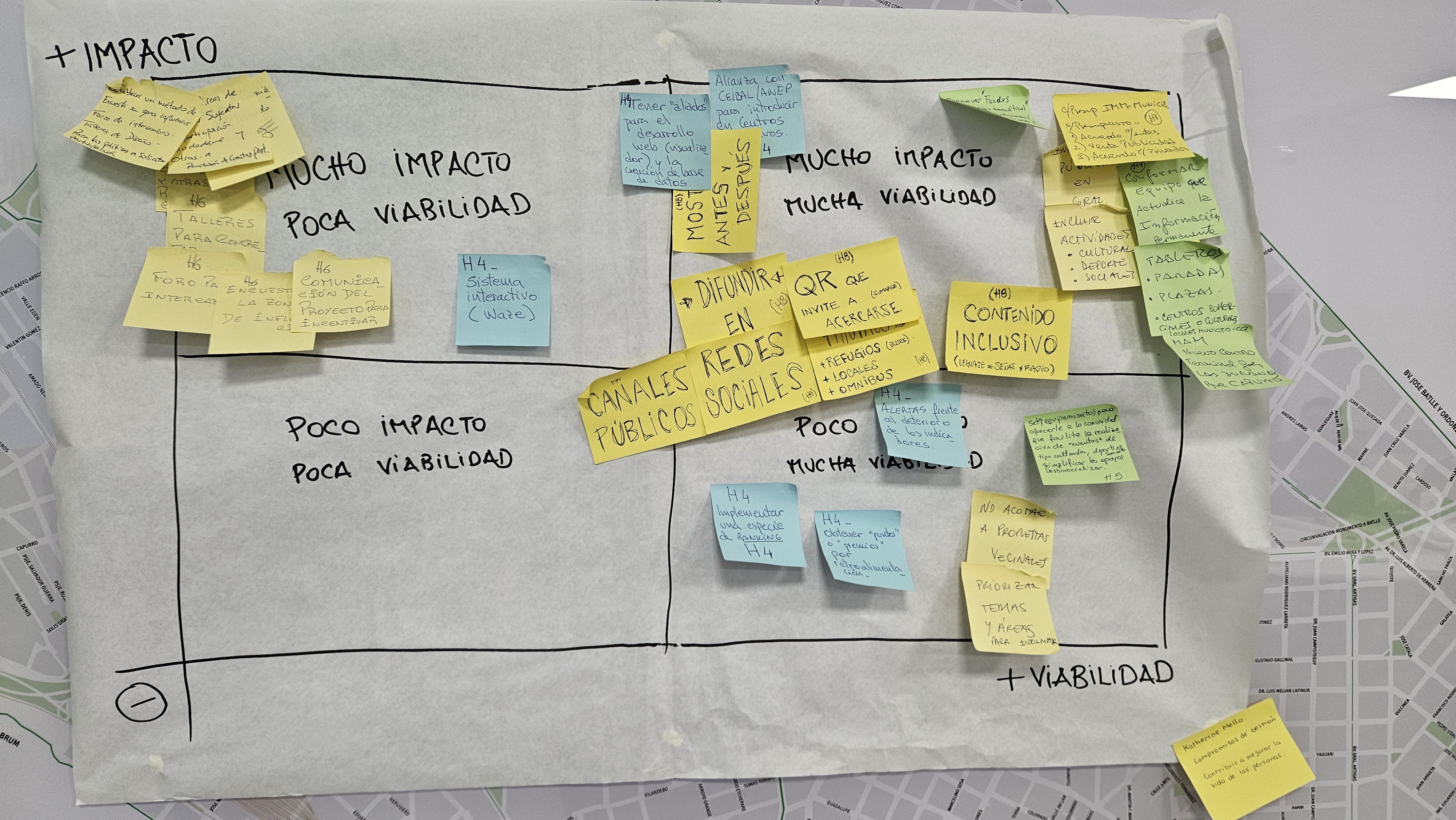
Nexo – Goberná tu barrio was created to bridge this gap, establishing a concrete infrastructure for collaborative governance between citizens and departmental and municipal governments. Through a participatory web platform, residents of Municipality C can propose neighborhood initiatives, deliberate, prioritize them through voting, and monitor their implementation through public traceability dashboards that show progress, responsible parties, and results. This information does not remain “up in the air”: it is integrated into the Management Commitments cycle, so that municipal goals and strategies incorporate initiatives and diagnoses arising from the collective intelligence of the territory.

The project is supported by a system of multiple incentives: for citizens, Civic Points, which recognize sustained participation; for civil servants, variable compensation linked to the achievement of goals agreed upon in these joint committees; and for political authorities, public visibility of priorities, progress, and results, which encourages competition for performance and inter-institutional collaboration to generate synergies. The platform also enables the participation of neighborhood organizations, academia, and local businesses as solution partners, expanding capacities and resources to carry out prioritized initiatives.

Nexo's innovation lies in turning a structural problem—the separation between citizens and public organizations—into an opportunity: a stable system where people can propose, decide, execute, and monitor together, generating more legitimate, traceable decisions that are aligned with the real needs of neighborhoods.

Know more...


Montevideo is a capital city with more than 1.3 million inhabitants (INE) and an outstanding level of connectivity: around 90% of the population has access to the internet (Uruguay Digital – EUTIC; URSEC 2023). Uruguay also has one of the highest voter turnout rates in the region: in the 2025 departmental and municipal elections, almost 90% of the electorate voted (Electoral Court 2025).

Despite these favorable conditions, citizen participation decreases significantly when mechanisms are not mandatory. In 2025, only 45.8% of people who cast a departmental vote also cast a valid municipal vote in the same election (Electoral Court 2025), which means that more than half of those who participated in the departmental election did not actually vote at the municipal level.

This gap widens in voluntary participation mechanisms. The results of the Participatory Budget and Neighborhood Council elections, according to data from the Municipality of Montevideo for 2023, recorded a total of 71,995 participants and 94,322 votes, which is equivalent to approximately 8% to 10% of the eligible municipal voter roll. In comparative terms, the difference between compulsory participation (~90%) and voluntary participation (8%–10%) is close to 80 percentage points, and the gap between valid municipal votes (45.8%) and voluntary participation exceeds 30 points.

This local pattern is consistent with comparative evidence. According to Latinobarómetro 2024, in Uruguay, 83% of people consider democracy to be the best system of government, but only 33% say they are satisfied with how it works. Likewise, levels of trust in institutions linked to democratic participation range between 10% and 15%. The coexistence of high normative support for democracy with low levels of satisfaction and trust helps to contextualize the decline in participation when mechanisms are voluntary and geographically close.

At the same time, the departmental and municipal government has an institutionalized mechanism of internal collaborative governance for planning and monitoring management: the Management Commitments, which bring together political authorities, directors, and civil servants each year to define goals and evaluate progress (IM 2024–2025). This system is robust, professional, and generates useful evidence for management, but it functions mainly internally and does not systematically incorporate neighborhood priorities or citizen contributions into the decision-making cycle.

In this context, Municipality C has an active neighborhood network and municipal technical capabilities, but lacks a method for integrating citizens and public organizations into a single process of diagnosis, prioritization, implementation, and monitoring. This is the structural gap that Nexo seeks to resolve by creating a stable system of collaborative territorial governance based on digital participation, traceability, and evidence.


Validate and institutionalize the Nexo Model:

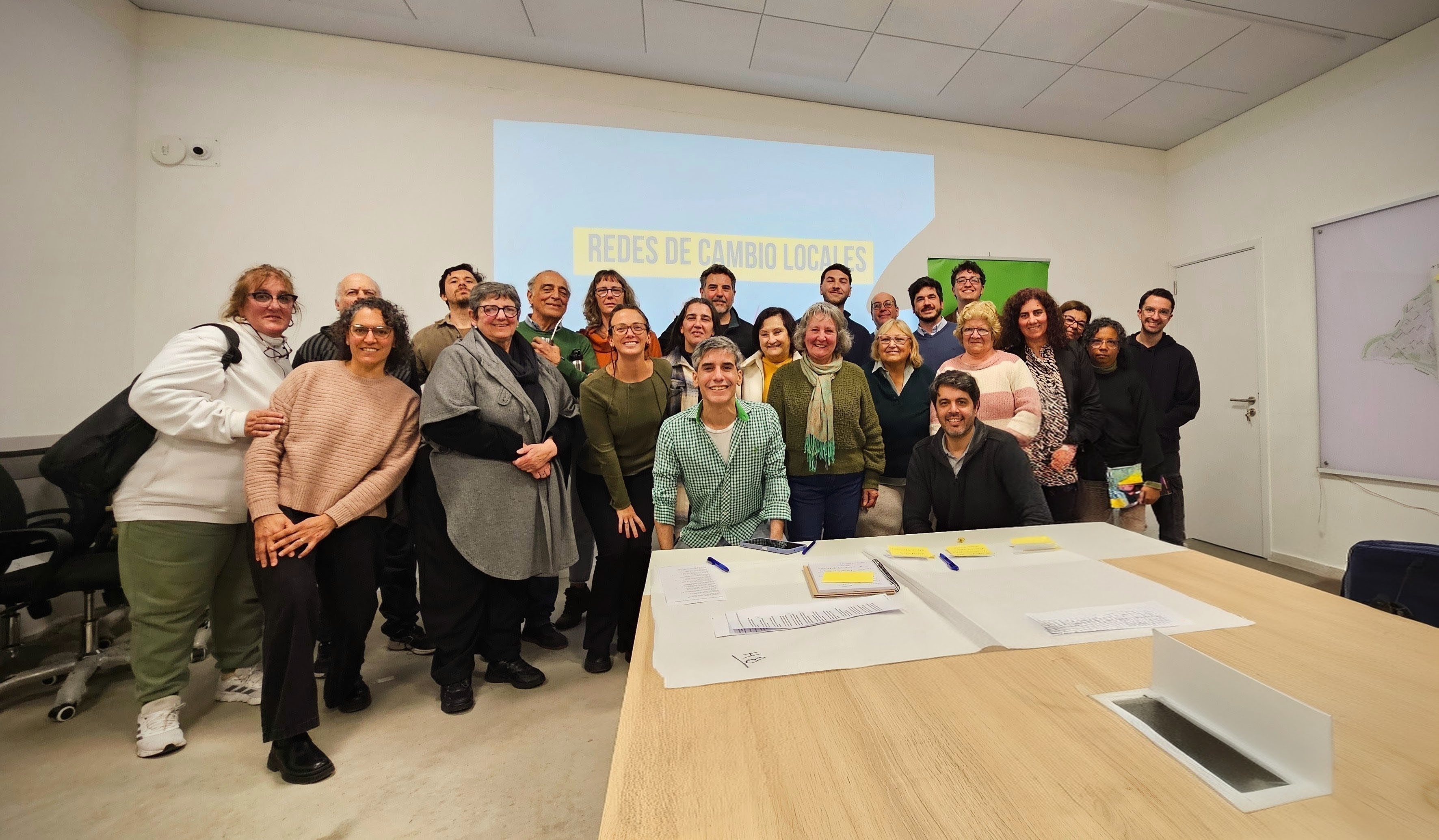
 The Nexo Model will be designed and validated in a participatory manner, including the co-creation and approval of regulations that establish clear rules for collaborative territorial governance and its articulation with the Management Commitments system.

Develop and implement the Nexo platform:

 A participatory web platform will be developed and implemented with public measurement and traceability dashboards, allowing neighborhood initiatives to be recorded and those responsible, goals, indicators, milestones, progress, and results to be visualized, ensuring transparency, monitoring, and accountability accessible to citizens and municipal teams.

Integrate citizen contributions into Management Commitments:

 Prioritized citizen initiatives will be explicitly integrated into the Management Commitments cycle, translating into measurable goals, indicators, and commitments within the current planning, monitoring, and evaluation system, and incorporated into public measurement dashboards.

Activate citizen participation in the territory:

 A citizen awareness and training campaign will be implemented to inform, train, and promote the active participation of the community and territorial actors.

Strengthen institutional capacities:

Civil servants and municipal teams will be trained in participatory methodologies and collaborative governance, ensuring the necessary capacities for the implementation and sustainability of the model.


Direct Results:

Institutionalized Nexus Model:

The project will have a formally institutionalized Nexus Model, with approved regulations and clear rules for collaborative territorial governance, verifiable through the existence of defined goals and indicators integrated into the Management Commitments cycle.

Platform and public dashboards in operation:

 The Nexus platform and public measurement and traceability dashboards will be operational and in use, allowing for the visualization of initiatives, responsible parties, goals, indicators, progress, and results, with verifiable periodic updates.

Institutional goals with citizen input:

 Initiatives prioritized by citizens will be translated into measurable goals and indicators within the Management Commitments, verifying the percentage of integrated initiatives and the number of goals with associated public indicators.

Effective voluntary citizen participation:

 Effective voluntary citizen participation will be recorded, measured as the proportion of participants in relation to the eligible electorate, as well as a greater diversity of actors involved.

Institutional capacities in place:

 Municipal officials and teams will have the capacities in place to implement the model, verified by the levels of training achieved and the effective use of the platform and dashboards.

Expected Impact:

Strengthened collaborative territorial governance:

 Collaborative territorial governance will be strengthened, complementing existing internal collaborative governance, with clear and legitimate rules among the different actors.

Greater transparency and accountability:

 Transparency, traceability, and accountability of public action will be increased through active public monitoring of initiatives and regular updates of dashboards.

Better alignment between government and territory:

 Progress will be made toward greater alignment between government and territory, reflected in the incorporation of neighborhood priorities into institutional goals and in the improvement of the quality of public decisions.

Increased voluntary citizen participation:

Contribute to increased voluntary citizen participation at the local level, in relation to the baseline observed in Participatory Budgeting and Neighborhood Councils.

Lessons learned and replicability of the model:

The project will generate replicable lessons learned, based on concrete improvements to the model arising from implementation and the interest of other territories in adopting or adapting the experience.


-Intendencia de Montevideo

-Municipio C de Montevideo.

-Concejos Vecinales del Municipio C de Montevideo.

-Organizaciones de la sociedad civil del Municipio C de Montevideo.

-Academia (Udelar – Facultad de Ciencias Sociales y Universidad ORT – Escuela de Gobierno).

-Secretaría de Educación para la Ciudadanía, Intendencia de Montevideo.

-e-marote: Ghostwriting & Cambio Cultural.


Maximiliano Nogueira - Technical Coordinator, Montevideo City Council (maximiliano.nogueira@imm.gub.uy)

Gabriela Belo - Quality Manager, Montevideo City Council (gabriela.belo@imm.gub.uy)

Guzmán Chaves Palma - Director, e-marote: Ghostwriting & Cultural Change (guzman.chaves@gmail.com)

Investment

(*): In kind/pro bonus

(**): Financing

Services
Funds
Needed
Covered
Solicited

UX (**)

u$s 5400.00

u$s 0.00

u$s 5400.00

Programador Nexo (**)

u$s 7200.00

u$s 0.00

u$s 7200.00

Programador Nexo (**)

u$s 7200.00

u$s 0.00

u$s 7200.00

Abogado (*)

u$s 1440.00

u$s 1440.00

u$s 0.00

Perfil – Equipo de Desarrollo de Campaña de Marketing y Posicionamiento (**)

u$s 18000.00

u$s 0.00

u$s 18000.00

Antropologo (*)

u$s 720.00

u$s 720.00

u$s 0.00

Comunicador Social (*)

u$s 720.00

u$s 720.00

u$s 0.00

Human resources
Funds
Needed
Covered
Solicited

Abogado (*)

u$s 720.00

u$s 720.00

u$s 0.00

Perfil Senior – Equipo de Compromiso de Gestión (*)

u$s 880.00

u$s 880.00

u$s 0.00

Perfil Junior – Equipo de Compromiso de Gestión (*)

u$s 560.00

u$s 560.00

u$s 0.00

Perfil – Participación Ciudadana (*)

u$s 640.00

u$s 640.00

u$s 0.00

1 perfil - Equipo del Montevideo LAB (*)

u$s 640.00

u$s 640.00

u$s 0.00

Perfil – Desarrollo de Software (**)

u$s 800.00

u$s 0.00

u$s 800.00

Perfil – Coordinador/a de Proyecto | Desarrollo de Software (**)

u$s 6000.00

u$s 0.00

u$s 6000.00

Perfil – Persona del equipo del Municipio (**)

u$s 640.00

u$s 0.00

u$s 640.00

Perfil Senior – Equipo de Compromiso de Gestión (*)

u$s 880.00

u$s 880.00

u$s 0.00

Responsable del area de Municipio (*)

u$s 1280.00

u$s 1280.00

u$s 0.00

Responsable del area de Municipio (*)

u$s 1280.00

u$s 1280.00

u$s 0.00

Perfil Senior – Equipo de Compromiso de Gestión (*)

u$s 1760.00

u$s 1760.00

u$s 0.00

1 representante concejo vecina

u$s 0.00

u$s 0.00

u$s 0.00

Perfil Senior – Equipo de Compromiso de Gestión (*)

u$s 880.00

u$s 880.00

u$s 0.00

Perfil Junior – Equipo de Compromiso de Gestión (*)

u$s 560.00

u$s 560.00

u$s 0.00

Perfil Junior – Equipo de Compromiso de Gestión (*)

u$s 560.00

u$s 560.00

u$s 0.00

Una persona del concejo vecina

u$s 0.00

u$s 0.00

u$s 0.00

Alcalde (*)

u$s 880.00

u$s 880.00

u$s 0.00

Perfil – Funcionario/a del Municipio (**)

u$s 560.00

u$s 560.00

u$s 0.00

Perfil – Funcionario/a del Municipio (**)

u$s 560.00

u$s 560.00

u$s 0.00

1 Comunicador Intendencia (*)

u$s 720.00

u$s 720.00

u$s 0.00

1 Comunicador Municipio (*)

u$s 720.00

u$s 720.00

u$s 0.00
TOTAL AMOUNTS:

u$s 62200.00

u$s 16960.00

u$s 45240.00

Spread the word about this project